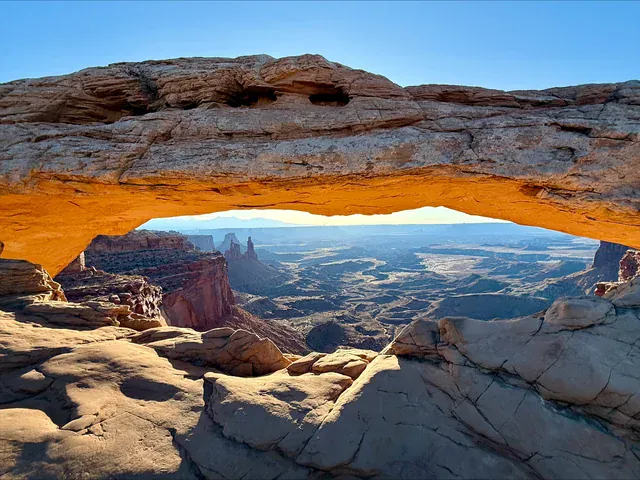
Top Landmark Tours in America: Operational & Logistics Guide
The spatial distribution of cultural, political, and geological monuments across North America forms a complex ecosystem of historical narrative and physical infrastructure. These sites do not exist as isolated points of interest; rather, they serve as focal points where national identity, engineering history, and natural geography intersect. Analyzing how these spaces are accessed, interpreted, and managed reveals the deep operational mechanics behind the domestic tourism economy and heritage preservation sector.
For the analytical traveler, an exploration of these sites extends far beyond superficial sightseeing. Truly engaging with a major monument requires understanding the structural, geopolitical, and ecological realities that define it. The logistics of crowd management, federal conservation mandates, and geographic isolation shape the visitor experience long before arrival. Consequently, evaluating these historical and natural nodes requires a comprehensive framework that accounts for institutional management, infrastructure capacity, and historical context.
The marketplace for structured exploration at these locations has evolved from basic sightseeing into a highly specialized sector of experiential travel. This evolution reflects a growing demand for deep educational context, exclusive access, and logistical efficiency. Understanding this landscape requires looking past generic travel marketing to examine the operational frameworks, resource costs, and systemic risks that govern the preservation and public experience of America’s foundational spaces.
Understanding “top landmark tours in america”
The operational concept behind top landmark tours in america is rooted in managing finite physical spaces facing immense public demand. In travel literature and popular media, this concept is often flattened into simple lists of highly photographed locations. In reality, a true landmark tour is an structured educational experience that balances the competing demands of historic preservation, public access, and interpretive depth. These experiences are shaped by complex federal regulations, indigenous land rights, and structural capacities that limit how close the public can get to sensitive sites.
A common analytical error is treating all heritage or natural tourism assets as uniform commodities. In urban environments, landmark management focuses primarily on crowd logistics, structural engineering, and municipal transportation integration. For example, a visit to an architectural icon on the Eastern Seaboard demands strict security screenings and precise elevator scheduling to manage thousands of visitors per hour within a compact vertical footprint.
Conversely, wild or geographically isolated monuments demand extensive resource management, search-and-rescue support, and long-range transport networks. These sites often operate far from municipal grids, requiring independent waste management, power generation, and seasonal adaptation.
Furthermore, this sector is heavily influenced by the legal frameworks of the National Park Service (NPS), the National Register of Historic Places, and local tribal governments. The locations that offer the most profound educational value are precisely those where conservation laws strictly limit modern development. This institutional scarcity creates an environment where access must be tightly controlled through permits, guided lotteries, and certified outfitters. Analyzing this space requires understanding how these regulatory, physical, and historical elements interact to structure public interaction with the country’s defining locations.
Deep Contextual Background and Historical Evolution
The systematic cataloging and public exploration of American landmarks developed in tandem with the nation’s infrastructure and geopolitical expansion. During the early nineteenth century, travel to prominent geological formations or early historical sites was a privilege reserved for the wealthy, hindered by the extreme friction of wilderness travel. The early roots of structured domestic tourism began with the expansion of the Hudson River steamboat lines and the completion of the Erie Canal, which turned natural wonders like Niagara Falls into early cultural destinations.
The late nineteenth century marked a major transition, driven by the expansion of transcontinental railroads and the creation of early federal conservation policies. Railroad companies like the Northern Pacific and Santa Fe recognized that scenic wonders could drive passenger volume.
The mid-twentieth century brought a major shift toward democratization, fueled by the rise of the personal automobile and the interstate highway system. This surge in public access overwhelmed existing, outdated infrastructure. In response, the National Park Service launched Mission 66, a massive, decade-long infrastructure program aimed at modernizing visitor centers, paving access roads, and creating the standardized interpretive signs seen across the country today. This era cemented the classic American road trip and established the baseline infrastructure for modern public tourism.
In the current landscape, the industry faces the challenge of managing unprecedented global demand within fragile ecosystems and historic structures. Modern tour design has moved away from passive observation toward deep contextual immersion, small-group exclusivity, and sustainable recreation. Contemporary operators must use advanced booking systems, smart crowd tracking, and zero-impact operational models. This ensures that opening a site to public education does not degrade the structural or ecological integrity of the monument itself.
Conceptual Frameworks and Mental Models
To systematically evaluate the operational viability and educational value of major top landmark tours in america, analysts should deploy specific conceptual frameworks. These mental models help cut through superficial marketing to reveal the underlying logistics and sustainability of an experience.
1. The Access-to-Immersive-Depth Matrix
This framework measures the relationship between how easy a landmark is to access and the depth of the educational experience it provides.
Top-tier experiences aim for the upper-right quadrant. They create structured paths that make complex or restricted sites accessible without oversimplifying the historical or environmental narrative. If a tour is highly accessible but lacks depth, it risks becoming a superficial photo opportunity that suffers from overcrowding. Conversely, if it offers immense depth but faces extreme access barriers, its utility is limited to a small group of specialized travelers.
2. The Carrying-Capacity Degradation Curve
This model tracks the tipping point where visitor volume begins to degrade both the physical site and the quality of the experience. It measures hard limits such as path erosion in desert ecosystems, humidity fluctuations inside historic brick fortifications, and acoustic crowding in sacred spaces. Tours that operate below this tipping point use timed entries and staggered arrivals. This preserves the monument’s physical structure while giving visitors the quiet space needed to process complex histories.
3. The Multi-Layered Interpretive Framework
This mental model evaluates how effectively a tour presents a site’s history. A high-quality experience avoids presenting a singular, one-dimensional narrative. Instead, it balances three distinct layers:
-
The Geological or Structural Layer: Explaining the physical engineering or deep time processes that shaped the monument.
-
The Documented Historical Layer: Chronicling the recorded events, political shifts, and human construction associated with the site.
-
The Indigenous and Cultural Memory Layer: Integrating the deeper, often complex stories of the communities that lived in the landscape long before it was designated as a public monument.
Key Categories and Operational Variations
The landscape of top landmark tours in america is highly varied, with each category shaped by distinct engineering, regulatory, and environmental considerations. The table below outlines the primary typologies across the domestic tourism sector.
Operational Profiles of American Landmark Typologies
| Landmark Typology | Primary Infrastructure Anchor | Core Operational Challenge | Regulatory Oversight Body | Peak Resource Dependency |
| Civil Engineering Marvels (e.g., Hoover Dam, Golden Gate Bridge) |
Concrete gravity dams, suspension towers, industrial utility corridors. | Active industrial safety management, terrorist threat mitigation, pedestrian flow control. | Bureau of Reclamation, Department of Transportation, state authorities. | High-capacity elevator systems, structural monitoring sensors. |
| Geological & Hydrological Nodes (e.g., Grand Canyon, Yosemite) |
Remote trail networks, wilderness valley floors, high-altitude view platforms. | Search-and-rescue readiness, extreme weather response, ecological impact management. | National Park Service, Bureau of Land Management. | Long-range shuttle fleets, potable water distribution systems. |
| Political & Constitutional Icons (e.g., Independence Hall, National Mall) |
Historic brick masonry, urban civic plazas, marble monument halls. | High-security screenings, urban protest integration, structural wear on aging buildings. | National Park Service, municipal police forces. | Climate-controlled preservation HVACs, timed-entry ticketing software. |
| Maritime & Insular Fortifications (e.g., Alcatraz, Statue of Liberty) |
Isolated harbor islands, unreinforced concrete cells, stone ramparts. | Marine ferry logistics, salt-spray corrosion control, isolated waste management. | National Park Service, United States Coast Guard. | Marine passenger vessels, self-contained island power grids. |
| Pre-Columbian & Indigenous Sites (e.g., Mesa Verde, Chaco Canyon) |
Fragile sandstone cliff dwellings, ancient earthen architecture, petroglyph panels. | Material preservation against touch, sacred space protection, remote dirt road access. | National Park Service, Tribal Historic Preservation Officers. | Structural stabilization shoring, low-impact boardwalk pathways. |
Regional Operational Decision Logic
Choosing how to navigate or manage an itinerary across these typologies requires analyzing environmental and infrastructure variables.
For instance, tours focusing on Civil Engineering Marvels operate within active infrastructure zones. Visitors share space with functioning hydroelectric turbines or public transit lanes, meaning operations are strictly bound by homeland security mandates and hard mechanical limits. These tours offer highly predictable schedules but allow minimal deviations due to rigid safety protocols.
Conversely, exploring Geological and Hydrological Nodes requires adapting to unpredictable environmental conditions. A sudden rockfall, wildfire, or flash flood can instantly shut down access routes, requiring operators to maintain flexible itineraries and robust backup communication systems. The design of these tours prioritizes physical endurance and seasonal timing over mechanical scheduling.
For Maritime and Insular Fortifications, the primary challenge shifts to marine logistics and saltwater corrosion management. Because these sites are entirely dependent on boat transport, weather conditions in the harbor can alter schedules instantly. Furthermore, operating on an isolated island requires maintaining self-contained water, waste, and power systems. This creates a high fixed operating cost that remains steady regardless of daily visitor numbers.
Detailed Real-World Scenarios
To understand the operational and logistical realities of running or participating in top landmark tours in america, we can look at several real-world operational scenarios. These cases highlight the hidden challenges, sudden pivot points, and second-order effects that define the high-end heritage tourism sector.
Scenario 1: Managing an Exclusive, Small-Group Exploration of Mesa Verde’s Cliff Dwellings
A specialized educational tour operator organized a high-depth architectural study of the remote cliff dwellings in Colorado, focusing on Ancestral Puebloan masonry.
-
The Unexpected Challenge: Mid-summer structural monitoring sensors inside a prominent cliff dwelling revealed a subtle shift in a foundational sandstone retaining wall. This movement was accelerated by a series of heavy afternoon thermal storms, forcing the National Park Service to instantly close the site to all standard foot traffic.
-
The Operational Impact: The tour could no longer enter the primary structural site, threatening the core educational value of the itinerary for clients who had booked months in advance.
-
The Resolution and Second-Order Effects: The operators shifted to a long-range, high-magnification optical survey from across the canyon rim, accompanied by a tribal historian who reframed the discussion around architectural preservation and the natural decay of sacred sites. This pivot saved the experience but required the operator to invest in premium spotting optics and adjust their physical pacing, demonstrating that flexibility is critical when operating in fragile archeological zones.
Scenario 2: Navigating Multi-Modal Transport Logistics During a Peak-Season Grand Canyon Expedition
A premium travel outfit ran an integrated rail-to-helicopter-to-mule expedition designed to showcase the complete stratigraphy of the Grand Canyon from rim to river.
-
The Unexpected Challenge: An early-season heatwave pushed inner-canyon temperatures at Phantom Ranch past 115 degrees Fahrenheit. This triggered an automatic federal ban on mule traffic down the Bright Angel trail to protect animal welfare. Simultaneously, high density-altitude conditions prevented the support helicopters from lifting off safely with full passenger loads.
-
The Operational Impact: The group was effectively split, with half the party stranded on the canyon floor with limited supplies and no access to their planned transportation out.
-
The Resolution and Second-Order Effects: The operators adjusted by shifting all ascents to late-night and early-morning foot travel, utilizing satellite messengers to coordinate water drops at designated trail rest houses. This incident led to a permanent change in their operations: they now mandate a mandatory fitness check and air-filtration clearance for all clients booking trips during high-temperature months.
Planning, Cost, and Resource Dynamics
Operating top-tier landmark experiences requires recognizing that capital requirements and operational expenses are heavily influenced by geographic isolation and regulatory compliance. The table below breaks down the typical cost structures and resource allocations across premium U.S. landmark tours.
Resource Allocation and Operational Cost Structures
| Cost Component | Budget Range (Premium Tier) | Primary Cost Drivers | Long-Term Operational Risks |
| Specialized Access Permitting | $500 – $2,500 per group | Federal backcountry lotteries, tribal access fees, exclusive commercial night-access passes. | Regulatory policy shifts, sudden cap reductions, permit revocation for rule violations. |
| Multi-Modal Transport Logistics | $1,500 – $6,000 per day | Private helicopter charters, specialized 4×4 overland vehicles, historic rail cabin bookings. | Fuel price volatility, mechanical wear from rough terrain, strict weather groundings. |
| Expert Interpretive Human Capital | $600 – $1,500 per day | Certified geologists, university-affiliated historians, indigenous cultural liaisons. | Talent scarcity in remote regions, rising seasonal housing costs for staff. |
| Safety & Redundancy Gear | $2,000 – $7,000 base investment | Satellite communication arrays, advanced remote medical kits, field oxygen systems, heavy-duty filtration. | Equipment wear from dust and moisture, battery degradation in extreme cold/heat. |
| On-Site Operational Overhead | $400 – $1,200 per day | Staging remote catering, private basecamp setups, specialized gear storage fees. | Supply chain delays in rural areas, local water shortages affecting basecamp setups. |
Tools, Strategies, and Support Systems
Managing top landmark tours in america requires deploying a specialized suite of technology, operational frameworks, and logistics management tools. These systems are essential for ensuring guest safety, maintaining regulatory compliance, and delivering clear educational value.
1. Satellite Mesh Communication Networks
Standard cellular networks are often unavailable across large stretches of the American West or within deep canyon systems. High-end tour operations use integrated satellite mesh networks like Garmin InReach or Iridium-based tactical radios. These tools allow support teams to track field groups in real time, send instant weather warnings, and coordinate emergency responses without relying on local cell towers.
2. Micro-Climate Modeling Software
In topographies like the Zion Narrows or the slot canyons of the Southwest, flash floods present a constant, serious threat. Operators rely on advanced micro-climate modeling software that aggregates data from upstream Nexrad radar installations and USGS streamflow gauges. This tech calculates real-time flash flood risks hours before rain clouds form over the immediate tour route.
3. Timed-Entry Optimization Algorithms
For high-volume historical nodes like Independence Hall or Alcatraz, tours must operate within strict entry windows.
4. Advanced Leave-No-Trace Operations
In fragile desert or alpine settings, tours follow strict waste and impact management practices.
5. Private Logistics Cooperatives
The smoothest tour experiences rely on strong partnerships with local gateway communities.
Risk Landscape and Failure Modes
Operating high-depth tours across prominent national spaces involves navigating a complex matrix of natural hazards, regulatory shifts, and infrastructure bottlenecks. If ignored, these challenges can quickly compromise tour safety, increase liabilities, and disrupt carefully planned itineraries.
1. Environmental Disruptions
-
Flash Flood Vulnerability: Sudden downpours miles away can send walls of water rushing through slot canyons and mountain valleys, trapping tour groups and washing out primary access roads within minutes.
-
Extreme Heat Exhaustion: High-altitude and desert environments often experience extreme temperature swings.
2. Regulatory and Policy Shifts
-
Sudden Resource Closures: The National Park Service and tribal authorities regularly close sensitive trails or historic buildings to protect wildlife migrations, conduct emergency stabilization, or honor indigenous cultural ceremonies.
-
Sudden Permit Reductions: To combat over-tourism, local management boards frequently slash commercial permit quotas with little warning. These changes can force operators to overhaul their calendars and redesign long-standing itineraries.
3. Infrastructure Bottlenecks
-
Gateway Transit Delays: Popular landmarks often suffer from severe traffic congestion along their primary entrance roads. These bottlenecks can cause missed entry windows for historic sites and disrupt tightly planned schedules.
-
Remote Utility Failures: Geographically isolated visitor centers and historic lodges operate on self-contained power grids or aging rural lines. Sudden power failures can disrupt security screenings, shut down water filtration systems, and force immediate site closures.
Governance, Maintenance, and Long-Term Adaptation
Ensuring the long-term viability of a landmark touring operation requires moving beyond reactive planning and establishing a strict calendar of operational checks and safety audits. The checklist below outlines the essential steps needed to protect groups and preserve access over multi-year touring cycles.
Multi-Tiered Tour Operations Audit Protocol
1. Pre-Season Operational Hardening (March–April)
-
Permit Verification: Confirm all commercial use authorizations (CUAs), tribal access letters, and backcountry lottery slots are locked in and active for the upcoming season.
-
Transport Fleet Audit: Conduct deep mechanical, suspension, and brake checks on all off-road vehicles, and verify that marine support vessels pass all Coast Guard safety line inspections.
-
Satellite Array Testing: Run a comprehensive diagnostics check on all satellite communication tools, update emergency contact trees, and swap out aging battery packs.
-
Guide Certification Check: Verify that all field staff hold active Wilderness First Responder (WFR) certifications and have completed updated cultural interpretation training.
2. Mid-Season Safety and Environmental Review (July–August)
-
Trail Degradation Scan: Monitor trail erosion levels along primary hiking routes, adjusting group sizes or modifying footpaths to minimize environmental impact.
-
Heat Management Check: Review water supply lines, electrolyte inventory, and cooling gear setups to ensure field teams are fully prepared for mid-summer temperature spikes.
-
Vehicle Strain Analysis: Inspect off-road tires, air filtration systems, and cooling loops for wear caused by constant exposure to dust, sand, and rough mountain terrain.
3. Post-Season Strategy Assessment (November–December)
-
Regulatory Adjustment Analysis: Review upcoming changes to National Park Service master plans, local zoning updates, or tribal land rules to adapt itineraries for the year ahead.
-
Partner Performance Review: Evaluate local transport, catering, and lodging partners, refining service contracts to maintain high operational standards.
Measurement, Tracking, and Evaluation
Evaluating the success of a landmark touring program requires balancing hard logistical metrics with qualitative assessments of the educational experience. Relying solely on passenger volume can mask underlying operational friction or a decline in safety margins.
Operators should track key operational and financial indicators, including:
-
The Safety Check-In Ratio: Monitoring the timing and consistency of satellite pings from field teams to ensure groups are moving safely along planned routes.
-
The Net Promoter Score (NPS) for Educational Value: Using post-tour surveys to measure how well guests connected with the historical and cultural narratives, ensuring the tour delivers real depth rather than just surface-level sightseeing.
-
Permit Utilization Efficiency: Tracking the ratio of secured permits to actual spots filled to minimize wasted overhead costs and optimize scheduling calendars.
-
Vehicle Maintenance Down-Time: Monitoring how many days transport fleets spend in the shop to balance vehicle rotations and prevent disruptive mid-tour mechanical breakdowns.
Contextual and Macro-Environmental Considerations
The long-term future of the landmark touring sector is deeply tied to changing climate patterns, shifting infrastructure priorities, and evolving cultural values. Operators and travelers must look beyond simple trip planning to consider how broader macro-environmental forces are reshaping public interaction with iconic spaces.
Changing weather patterns are altering traditional tour calendars. In the American West, longer wildfire seasons and unpredictable winter snowpack are forcing operators to adjust their schedules, shifting high-depth expeditions to earlier in the spring or later in the autumn to avoid smoke risks and trail washouts.
At the same time, the field of historical preservation is undergoing an important cultural evolution. This approach ensures that exploring a site honors all layers of its history.
On the infrastructure front, the growing popularity of domestic tourism has accelerated the push for green transportation alternatives within national spaces. High-volume locations are increasingly replacing standard vehicle access with mandatory electric shuttle fleets, expanded bicycle corridors, and car-free zones. This shift reduces local air and noise pollution, helping protect the natural quiet and integrity of the country’s most cherished landmarks for decades to come.
Conclusion
The execution of high-depth tours across America’s prominent landmarks requires balancing detailed logistical planning, historical expertise, and rigorous safety management. These historical and natural hubs are not static scenic backdrops; they are fragile, highly regulated environments that demand respect and careful coordination to explore safely. Navigating these spaces successfully means working within federal conservation rules, adapting to changing wilderness conditions, and engaging deeply with the diverse histories that define each site.