Top Roadside Assistance Plans: 2026 In-Depth Evaluation Guide
Modern vehicular travel relies on a complex infrastructure that drivers largely take for granted until it breaks down. For decades, the safety net for mechanical failure, flat tires, and depleted batteries was a straightforward equation: a local mechanic with a tow truck or a single national auto club membership. Today, that landscape has fractured into a highly competitive ecosystem populated by traditional motor clubs, insurance riders, credit card perks, manufacturer warranties, and on-demand digital dispatch networks. Selecting an appropriate safety net requires navigating hidden service limits, complex regional dispatch mechanics, and contractual definitions of what constitutes an emergency.
The decision is rarely about finding a service that can hook a car to a winch. Instead, it is an exercise in risk management and logistical alignment. A commuter driving fifteen miles daily through a major metropolitan corridor faces vastly different operational vulnerabilities than a driver cross-cutting rural state highways with a trailer in tow. The efficiency of a roadside response depends less on the brand logo on a membership card and more on the underlying provider network, local dispatch priority metrics, and the specific terms of service governing non-standard extractions or long-distance towing.
This analysis deconstructs the structural components of the roadside assistance market. By examining the operational mechanisms, financial trade-offs, and systemic failure points of these programs, this guide provides a framework for evaluating vehicle protection strategies.
Understanding “top roadside assistance plans”
The phrase “top roadside assistance plans” is frequently treated in consumer media as a static ranking, usually sorted by annual subscription price or the raw mileage allowance of a towing provision. This simplistic approach obscures how these services actually operate. True efficacy is defined by the alignment between a program’s contractual service limits and the driver’s specific operational profile.
At its core, a roadside assistance plan is a hybrid entity: part insurance policy, part logistical dispatch service. When a consumer buys a plan, they are not purchasing a guaranteed, instantaneous arrival of a mechanic. They are buying access to a proprietary or aggregated network of independent towing operators, alongside a financial cap on specific emergency services.
Evaluating these programs requires looking past marketing bullet points to analyze structural limits:
-
Geographic Extent Boundaries: How coverage areas are mapped, particularly concerning unpaved roads, remote state parks, or border crossings.
-
Asset Class Restrictions: The explicit exclusion of dual-rear-wheel trucks, specific trailer configurations, or modified off-road vehicles.
-
Secondary Extraction Exclusions: Restrictions on winching or recovery if the vehicle is located more than a specific distance (e.g., 50 feet) from a publicly maintained road.
-
Dispatch Tier Priorities: How an independent towing company prioritizes an auto club dispatch versus a direct, cash-paying customer during high-demand events like a regional snowstorm.
Oversimplifying these factors leads to severe operational failures. Drivers frequently discover the limitations of their policy only when standing on a dark highway shoulder, learning that their “unlimited” plan does not cover a vehicle with a modified suspension, or that their towing mileage allowance leaves them fifty miles short of the nearest qualified repair facility.
The Systemic Evolution of Roadside Dispatch
The roadside assistance industry originated as a localized, fraternal network of motorists. In the early twentieth century, as mass-produced vehicles began outpacing municipal road development, driver cohorts formed regional clubs to share mechanical expertise, tools, and maps. These early organizations gradually consolidated into larger federations, introducing standardized towing services and emergency road bail bonds. The business model was straightforward: members paid a flat fee, and the club contracted directly with local garages to service broken-down vehicles within a clear, defined territory.
The mid-to-late twentieth century brought interstate highway systems and centralized call centers, transforming regional motor clubs into national institutions. This predictable cash flow allowed major clubs to establish dominant footprints, dictating service standards and reimbursement rates to independent garage owners across North America.

The late 1990s and early 2000s introduced a structural shift: the emergence of wholesale third-party administrators (TPAs). Companies realized that roadside assistance was a highly effective customer retention tool. Auto manufacturers began bundling roadside coverage into new car warranties, and insurance corporations integrated cheap roadside riders into standard automotive policies.
Instead of building their own towing networks, these corporate entities outsourced operations to massive TPAs. These aggregators built digital dispatch platforms that electronically route service calls to independent towing providers based on algorithmic pricing and proximity matrix variables.
Today, this evolution has culminated in an environment governed by digital logistics platform dynamics. On-demand smartphone applications allow users to bypass memberships entirely, paying transactional, market-rate fees for single dispatches.
Concurrently, traditional membership clubs have been forced to modernize their tech stacks, matching users with service vehicles via real-time GPS tracking. This technological overlay has optimized dispatch times in ideal conditions, but it has also exposed vulnerabilities, decoupling localized operator knowledge from the automated dispatch queues that manage regional roadside infrastructure.
Conceptual Frameworks for Risk Evaluation
To objectively assess where a driver should invest their capital when looking at roadside safety nets, it helps to apply specific risk-management frameworks. These models strip away brand names and focus purely on probability, logistics, and resource availability.
1. The Operational Radius Model
This framework categorizes vehicle use based on the distance from the vehicle’s primary garaging location and the density of commercial repair infrastructure.
-
Application: For a vehicle operating exclusively within a 20-mile urban radius, towing distance is rarely a critical failure point; network density and response times matter most. Conversely, for a vehicle operating in a 200-mile regional radius, the primary metric shifts to total towing distance flexibility, as the nearest specialized repair facility could easily be 50 or 100 miles away.
-
Limitation: This model assumes consistent infrastructure density and does not account for localized “dead zones” within an urban corridor, such as deep underground parking structures or restricted-access toll roads where standard club dispatchers cannot operate.
2. The Dependency-Criticality Matrix
This model plots the vehicle’s utility against the availability of alternative transportation options.
-
Application: A high-criticality, low-redundancy profile (e.g., a rural medical worker who must travel regardless of weather) requires a roadside plan with high priority dispatch tiers or dedicated service networks. A low-criticality, high-redundancy profile (e.g., a multi-car suburban household with access to ridesharing) can safely rely on a lower-tiered, slower-responding insurance rider.
-
Limitation: It is difficult to quantify emotional stress or the specific financial penalties of a missed obligation within a static matrix.
3. The Asset-Infrastructure Alignment Framework
This framework matches the mechanical complexity and physical dimensions of the vehicle with the capabilities of standard recovery equipment.
-
Application: Standard flatbeds easily handle an unmodified compact sedan. However, low-clearance sports cars require flatbeds with specialized ramps, and heavy-duty four-wheel-drive trucks require medium-duty recovery vehicles or flatbeds with specific wheel-lift attachments.
-
Limitation: Most roadside plans do not allow you to specify your equipment needs during enrollment.
Institutional Formats and Program Typologies
The market for roadside assistance is split into four distinct institutional structures. Each format uses a different underlying economic model, creating distinct operational strengths and built-in vulnerabilities.
1. Dedicated Standalone Motor Clubs
These are traditional, membership-driven organizations where roadside protection is the primary product. They operate on a subscription-underwriting model, pooling membership dues to fund a massive infrastructure of dedicated service vehicles or preferred contracts with independent towing operators.
-
Pros: High priority with local towing networks, comprehensive coverage tiers, and protection that follows the driver rather than a specific vehicle.
-
Cons: Highest annual cost in the market; prone to promotional cross-selling of travel services and financial products.
2. Auto Insurance Policy Riders
Most major automotive insurance carriers offer roadside assistance as an add-on coverage item, often for a nominal fee per vehicle.
-
Pros: Extremely inexpensive upfront cost; consolidated billing into an existing auto premium.
-
Cons: Frequent claims can sometimes be logged as towing occurrences on a driver’s insurance profile, potentially impacting underwriting risk scores. Service limits are typically restrictive, offering minimal towing mileage before out-of-pocket per-mile fees kick in.
3. Manufacturer-Bundled Warranties
New and certified pre-owned vehicles regularly include roadside assistance plans tied directly to the vehicle’s identification number (VIN) for the duration of the powertrain or bumper-to-bumper warranty.
-
Pros: Zero out-of-pocket cost for the first few years of ownership; vehicle is typically towed directly to a brand-certified dealership, ensuring factory-trained technicians and OEM parts.
-
Cons: Zero flexibility in towing destinations—the plan will rarely tow to an independent shop or your home if a dealership is closer. Coverage terminates automatically based on vehicle age or mileage limits.
4. Credit Card and Financial Institution Perks
Premium credit card issuers frequently include roadside dispatch access or fully comped roadside assistance benefits as part of their annual fee structures.
-
Pros: Useful for occasional travelers; eliminates the need to pay for a standalone membership if you already pay a card annual fee.
-
Cons: The benefit is often a “dispatch service” rather than a paid plan, meaning the card company finds the tow truck, but charges a pre-negotiated flat fee directly to your card per service event. Paid variants often have low caps on towing mileage or extraction limits.
Comparative Evaluation Architecture
Realistic Decision Logic
Choosing between these structures requires analyzing how you use your vehicle. If you drive a modified, older, or highly specialized vehicle outside major metro corridors, standard insurance riders or credit card perks will likely fall short due to their rigid mileage caps and standard equipment assumptions.
In this scenario, a higher-tier standalone motor club membership is practically mandatory to avoid substantial out-of-pocket towing surcharges.
Conversely, if you operate a fleet of standard commuter cars within a tightly defined suburban grid, paying for multiple top-tier motor club memberships creates unnecessary financial redundancy. The insurance rider or credit card perk provides an adequate baseline safety net, as the vehicle is always close to repair facilities, and alternative transit options are readily available if dispatch delays occur.
Real-World Operational Scenarios
To accurately evaluate a plan’s strength, you have to look at how its contracts play out on the ground. Below are four common roadside emergencies that highlight the gap between a plan’s marketing brochure and its actual legal terms.
Scenario 1: The Remote Off-Pavement Mechanical Failure
A driver traveling through a state forest parks on a dirt pull-off area located 100 feet from the paved state route. The alternator fails, disabling the vehicle.
-
Plan Dynamic: The driver calls their roadside provider. The dispatcher asks for the nearest cross street or GPS coordinates. Once it’s clear the vehicle is on an unpaved, non-municipally maintained road, many standard plans will deny the dispatch. The contract language often dictates that service will only be provided on “publicly maintained roads.”
-
Failure Modes: If a truck is sent, the operator may refuse to pull onto the dirt lot without an additional out-of-pocket “winching” or “extraction” fee, which can easily run $150 to $300 per hour depending on the rig required.
-
Second-Order Effects: The vehicle must be pushed or moved by the owner to the edge of the asphalt pavement before the dispatch can be officially executed under standard contract terms.
Scenario 2: The Multi-State Long-Distance Towing Emergency
A vehicle suffers a catastrophic transmission failure on an interstate highway 80 miles away from home and 40 miles away from the nearest authorized repair facility specializing in that vehicle brand.
-
Plan Dynamic: A basic roadside plan covers towing up to 3 to 5 miles, after which a per-mile charge (often $5 to $10 per mile) applies. Under a basic plan, towing the car to the specialized facility 40 miles away results in an immediate out-of-pocket charge for the uncovered 35 miles. A premium plan with a 100-mile towing allowance handles this scenario without any surcharges.
-
Failure Modes: The driver assumes their “unlimited” plan covers towing back to their house 80 miles away. However, the dispatcher notes that a qualified local garage is closer (only 10 miles away) and exercises the policy’s “nearest repair facility” clause, refusing to pay for the long-distance tow home.
-
Second-Order Effects: The vehicle is dropped at an unfamiliar, closed garage over the weekend. This forces the driver to pay for an expensive hotel or alternative transportation home, followed by a second, fully out-of-pocket tow later in the week to get the car to their preferred mechanic.
Scenario 3: The Urban Commuter Gridlock Peak Demand Event
A sudden, severe winter storm hits a major metropolitan area during afternoon rush hour, causing thousands of vehicle batteries to fail and minor collisions across the city grid.
-
Plan Dynamic: Digital dispatch networks become completely overwhelmed. Third-party administrators attempt to broadcast service calls to independent operators at pre-negotiated, low contract rates. Independent towing operations, facing massive local demand, ignore these low-paying TPA dispatches. Instead, they prioritize high-paying direct cash calls or lucrative police department impound dispatches.
-
Failure Modes: The stranded driver receives automated text messages pushing their estimated time of arrival (ETA) back by 60-minute increments. The total wait time can easily stretch to 5 or 6 hours.
-
Second-Order Effects: The driver is forced to abandon the vehicle on a designated snow route to seek shelter. The city subsequently impounds the car, leaving the owner responsible for municipal towing fees and storage fines that cannot be reimbursed by their roadside assistance plan.
Scenario 4: The Commercial Asset Exclusion Discrepancy
An independent contractor using a standard Ford F-350 dual-rear-wheel pickup truck to haul a landscape trailer experiences a blowout on a rear inner tire while traveling between job sites.
-
Plan Dynamic: The contractor calls their roadside assistance provider, expecting a standard tire change. The dispatcher notes the “dual-rear-wheel” configuration and flags the vehicle as a commercial asset or an excluded weight class under a standard consumer policy.
-
Failure Modes: Dispatch is denied entirely. The consumer plan’s fine print explicitly excludes vehicles with a gross vehicle weight rating (GVWR) exceeding 10,000 pounds or vehicles equipped with more than four wheels touching the ground.
-
Second-Order Effects: The contractor must locate a commercial medium-duty towing provider independently, paying premium commercial road-service rates out of pocket. Meanwhile, their business operations stop for the day, compounding the financial loss.
Financial Dynamics and Cost Structure Analytics
Evaluating a roadside plan requires looking closely at total cost of ownership vs. transactional risk.
Direct Subscription Outlay: The compounding cost of annual renewals across all vehicles within a household or fleet entity.
-
Overage Vulnerability: The per-mile rates charged by providers once a plan’s baseline towing mileage cap is exceeded. These rates are unregulated in many jurisdictions and can scale rapidly during off-hours or holidays.
-
Equipment Surcharges: Additional fees billed directly by the operator for specialized tasks, such as clearing a frozen electronic parking brake or using a flatbed dolly for an all-wheel-drive vehicle with locked wheels.
-
Opportunity Cost of Wait Time: For service professionals or logistics operators, a delayed dispatch directly equals lost billable hours or missed delivery windows.
Cost Exposure Metric Matrix
The table below outlines typical market rates for standard roadside services, contrasting contract rates with out-of-pocket costs and highlighting the variance drivers face during emergencies.
Strategic Management and Deployment Tools
For individuals managing family vehicles or business fleets, navigating an unexpected roadside failure requires clear, actionable workflows. Relying entirely on an automated phone menu or a slow smartphone app during an emergency often leads to frustrating delays and administrative errors.
Risk Landscape and Failure Modes
The structural safety nets built into roadside assistance programs are prone to systemic failure. These breakdowns typically happen when multiple hidden operational issues compound at once during an emergency.
1. The Algorithmic TPA Trap
Third-party administrators use predatory pricing models when dispatching calls to independent towing networks. The TPA algorithm tries to route the call to the operator willing to accept the lowest pre-negotiated fee.
If local towing companies are busy with more profitable work, the TPA’s service request sits unaccepted in a digital queue. The driver sees this on their end as a constantly updating, inaccurate arrival time, completely unaware that no truck has actually accepted their job.
2. Lockout and Key-Generation Failure Modes
Modern automotive security uses encrypted transponder keys and complex electronic control modules. When a driver calls for a lockout service, standard roadside plans usually dispatch a basic operator equipped with simple mechanical bypass tools (like wedges or air bags).
If the vehicle uses advanced deadlocking systems or proximity keys, these mechanical bypass techniques can damage door seals or scratch paint without opening the car. If a key is lost entirely, standard plans will only pay for a basic tow to a dealership; they will not cover the substantial cost of cutting and programming a new transponder key on-site.
3. Drivetrain Damage from Incorrect Towing Equipment
Vehicles with All-Wheel-Drive (AWD), permanent Four-Wheel-Drive (4WD), or dual-motor electric configurations cannot be safely towed with their wheels on the ground using a traditional two-wheel wheel-lift truck. Doing so can cause immediate, catastrophic damage to the center differentials, transfer cases, or electric traction motors.
If a roadside dispatcher accidentally sends a standard tow truck instead of a flatbed—and the operator hooks up the vehicle incorrectly—the owner faces major mechanical damage. Proving the towing company caused this damage requires a long, complex legal battle, during which the vehicle remains undriveable.
Governance, Maintenance, and Program Adaptation
A roadside assistance strategy should not be a “set-and-forget” purchase. As family vehicles age, warranties expire, or business travel patterns change, your roadside safety net needs to be reviewed and adjusted accordingly.
The Annual Policy Audit Workflow
To keep your coverage aligned with your real-world risks, run through this layered verification checklist every twelve months:
-
Verify Warranty Expiration Windows: Check the exact mileage and date boundaries of your vehicle’s factory powertrain warranty to see precisely when bundled manufacturer roadside benefits will end.
-
Review Insurance Claims Activity: Pull your recent auto insurance claims history to ensure that simple roadside service requests haven’t been erroneously logged as at-fault comprehensive claims, which can negatively affect your premium calculations.
-
Audit Credit Card Benefit Terms: Read the updated Guide to Benefits for your premium credit cards. Issuers frequently remove or scale back roadside dispatch perks to cut costs without clearly notifying cardholders.
-
Match Towing Caps to Real Routes: Analyze your primary travel corridors from the past year. Ensure your plan’s maximum towing mileage cap can actually cover the distance between your furthest regular destination and a qualified, trusted mechanic.
-
Inspect Vehicle Modifications: If you added aftermarket parts over the past year—such as suspension lift kits, larger off-road tires, or heavy cargo racks—call your provider to confirm these updates don’t violate weight or dimension exclusions in your contract.
Performance Measurement and Evaluation Metrics
To evaluate whether a roadside assistance plan is actually delivering on its promises, you have to look beyond basic customer service ratings.
Leading vs. Lagging Performance Indicators
Evaluating a provider’s true operational health requires monitoring two distinct types of data:
Leading Indicators (Predictive Metrics)
-
Contracted Fleet Density Ratio: The total number of independent towing trucks contracted to the provider’s network within a specific zip code, divided by the active member population in that same area. Low ratios point to inevitable delays during peak demand events.
-
TPA Dispatch Acceptance Speed: The average time it takes for an independent operator to accept a digital dispatch request from a third-party administrator during standard business hours.
-
Average Network Contract Rate: The baseline fee the provider pays its towing operators. If this rate falls too far below the local cash market rate, operators will routinely deprioritize the plan’s members.
Lagging Indicators (Historical Outcomes)
-
True Arrival Variance: The difference between the initial estimated time of arrival (ETA) given to the stranded driver and the actual time the service truck arrives on scene.
-
Unresolved Incident Secondary Tow Rate: The percentage of service calls where a vehicle had to be towed a second time because the initial roadside fix (like a battery jump or temporary tire plug) failed within twenty-four hours.
-
Out-of-Pocket Overage Ratios: The total unexpected dollar amount a member pays out of pocket for service extensions, winching, or extra mileage, divided by the total number of service calls filed.
Internal Service Level Documentation Models
When managing a commercial fleet or keeping records for a household, you should document every roadside event. This data gives you the leverage needed to challenge unfair billing overages or decide whether to drop a poor-performing provider at renewal time.
Common Misconceptions and Systemic Myths
Myth 1: “Unlimited towing means I can choose to be towed anywhere in the country for free.”
The Reality: There is no such thing as an unconditional, unlimited long-distance tow in the consumer market. Plans that advertise “unlimited” towing almost always include a hidden restriction limiting transport to the nearest qualified repair facility. If you want the vehicle towed to your home shop or a dealership miles away, you are responsible for paying the per-mile overage charges from the nearest facility to your chosen destination.
Myth 2: “Roadside assistance plans cover vehicle recovery if I get stuck in deep snow or mud in my driveway.”
The Reality: Standard roadside assistance plans are designed exclusively for emergency breakdowns that happen during active travel. Winching and extraction benefits are typically limited to vehicles within a short distance (usually 50 feet or less) of a publicly maintained road. If your vehicle is stuck deep on private property, down a long farm lane, or in a muddy off-road park, providers will classify the event as a non-covered recovery, requiring you to pay full commercial winch rates out of pocket.
Myth 3: “If my car breaks down while towing a trailer, the plan automatically hooks up and tows both assets.”
The Reality: Unless you have explicitly upgraded to a specialized commercial, RV, or trailer-specific plan tier, your standard consumer roadside coverage applies only to the motorized vehicle itself.
If your car breaks down, the tow truck operator will unhook your landscape, boat, or utility trailer and leave it on the roadside shoulder.
Myth 4: “Calling for a jumpstart or tire change through my insurance provider won’t impact my auto premium rates.”
The Reality: Insurance companies treat every single dispatch under a roadside rider as a policy claim. While a single towing claim rarely triggers an immediate rate hike on its own, multiple roadside requests within a short window can absolutely change your overall underwriting risk profile.
Myth 5: “All roadside service operators are fully certified mechanics who will try to fix my engine on the shoulder.”
The Reality: The vast majority of roadside dispatches are executed by basic towing operators, not master mechanics. Their job is to safely hook up your vehicle, swap a tire, or connect a jumper cable as fast as possible to keep traffic moving. Contractual liability rules prevent these operators from performing complex mechanical diagnostics or roadside engine repairs on a highway shoulder.
Myth 6: “Smartphone maps and digital dispatch apps have made physical location tracking completely foolproof.”
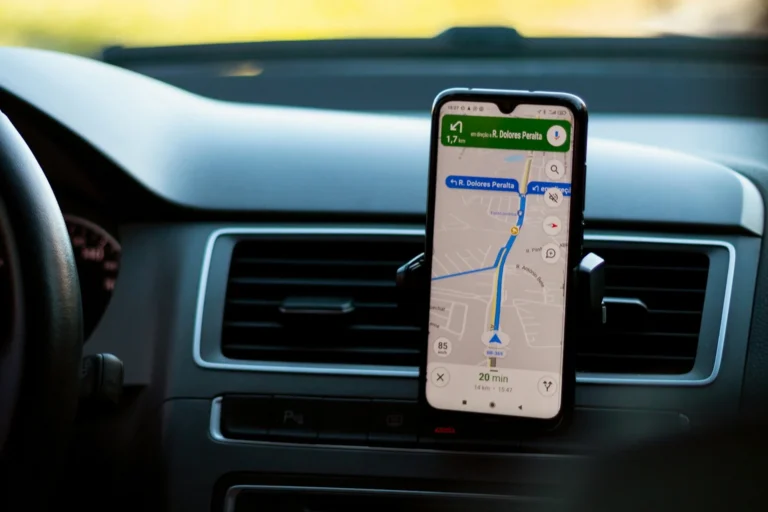
The Reality: GPS signals regularly drop out, map apps often mislabel highway mile markers, and automated systems easily confuse parallel access roads with main highway lanes. If a driver blindly trusts an app without noting real-world milestones or intersecting roads, the dispatcher can easily send the tow truck to the wrong side of an interstate or a completely different exit ramp, adding hours to your wait time.
Ethical, Regulatory, and Contextual Realities
Understanding these hidden market pressures explains why roadside service can feel so unpredictable during widespread emergencies.
The Realities of Independent Operator Compensation
The core issue in modern roadside dispatch is a major imbalance in compensation. Third-party administrators try to control the market by squeezing the fees they pay to local towing companies. A towing garage might charge a walk-in cash customer $125 for a local tow, but a corporate TPA contract might only reimburse that same garage $45 to $60 for the exact same job.
When bad weather hits and service requests skyrocket, towing operators naturally prioritize high-paying direct cash clients, local police impound contracts, and commercial accounts over low-paying motor club or insurance dispatches.
Consumer Rights and Regulatory Protections
The regulatory oversight governing roadside assistance varies significantly from state to state. Because these plans are hybrid products, they generally escape the strict consumer protection laws that apply to standard health or property insurance policies.
In many areas, towing operators can set their own out-of-pocket pricing for extra miles or special equipment use during a roadside emergency, leaving stranded drivers with little recourse if they feel gouged.
A few regions have introduced consumer protections that limit how much towing companies can charge for highway breakdowns, but these rules usually apply only to non-consensual police tows from crash scenes. Voluntary roadside assistance requests remain governed by the strict, often unread terms of the membership contract.
This leaves the responsibility entirely on the consumer to understand their plan’s limits, track their service events, and choose a policy format that matches their true risk profile.
Synthesis and Strategic Outlook
As vehicles become more technologically advanced, the roadside assistance landscape must adapt to match. The growing market share of electric vehicles, complex driver-assistance sensors, and connected automotive platforms is changing the very nature of roadside emergencies.
A simple dead battery or a standard flat tire now frequently involves high-voltage electrical diagnostics or sensitive tire-pressure monitoring systems that require specialized tools and training to service safely.
The future of roadside safety nets lies in deeper digital integration and specialized equipment fleets. Top plans are shifting away from traditional, generic towing contracts toward networks that feature flatbeds with built-in vehicle chargers, specialized low-clearance dollies, and advanced diagnostic tools.
At the same time, vehicle telematics platforms are beginning to predict mechanical failures before they happen, allowing systems to dispatch a service truck to a driver’s exact location before the car actually breaks down.
Ultimately, choosing an effective roadside assistance plan comes down to minimizing your real-world logistical vulnerabilities. No single provider can offer a perfect, instant solution for every type of driver on every road.
By analyzing your specific operational footprint, reading past marketing claims to understand the actual contract language, and tracking performance metrics over time, you can build a redundant, highly effective safety net that keeps you moving forward—no matter what happens on the road ahead.