Luxury Cabin Destinations USA: Elite Wilderness Estates & Design
Luxury Cabin Destinations USA. An evolution has occurred in the high-end travel sector. The conventional definition of a high-end retreat—once anchored in the uniform opulence of five-star urban hotels or manicured coastal resorts—has shifted toward seclusion, architectural distinction, and environmental integration. This structural realignment has placed rural and wilderness enclaves at the center of the premium hospitality market. Wealthy travelers increasingly look past generic, gold-plated excess, opting instead for architectural masterworks that offer radical privacy and deep immersion in North America’s most striking topographies.
This market segment is built on a careful balance between natural isolation and highly refined engineering. The modern high-end cabin is not a rustic shelter with updated fixtures; it is an engineered sanctuary that incorporates passive house principles, structural steel, expansive structural glass, and sophisticated off-grid infrastructure. These properties are purposefully built into highly restricted, topographically complex landscapes. Consequently, analyzing these destinations requires looking closely at real estate fundamentals, micro-market dynamics, building constraints, and the changing preferences of travelers who view seclusion as the ultimate modern luxury.
To truly understand this landscape, one must look beyond the glossy marketing of short-term rental platforms. Evaluating these destinations requires an analytical framework that considers geographic isolation, seasonal accessibility, structural design, and localized operational infrastructure. This text serves as a definitive analysis of the premium wilderness lodging market across the United States. It breaks down the historical shifts, financial realities, architectural trends, and operational risks that define the country’s most exclusive rural real estate and travel regions.
Understanding “luxury cabin destinations usa”
The phrase luxury cabin destinations usa represents a complex, multi-billion-dollar intersection of institutional real estate investment, bespoke architectural engineering, and elite experiential travel. In the modern hospitality and property markets, this concept is often oversimplified. It is frequently reduced to a generic catch-all for any rustic structure featuring an outdoor hot tub and a premium appliance package. In reality, a true high-end cabin destination is defined by a rare combination of geographic scarcity, structural autonomy, and elite asset management.
A common mistake is evaluating these properties through the lens of standard residential real estate or urban hospitality. In urban centers, luxury is largely additive—defined by concierge staff, proximity to commercial cores, and shared amenities. In contrast, premium wilderness destinations derive value from subtraction: the absence of ambient light pollution, the elimination of adjacent visual developments, and the intentional reduction of noise. The engineering required to deliver five-star comfort within these isolated settings is inherently complex. A property must maintain complex mechanical, electrical, and plumbing systems across steep terrains, sub-zero winter temperatures, and highly fragile ecosystems without disrupting the surrounding landscape.
Furthermore, these destinations are heavily shaped by strict zoning, environmental conservation easements, and municipal building bans. The markets that command the highest average daily rates (ADRs) and property valuations are those where additional development is nearly impossible. This supply-side restriction, paired with sustained demand for private vacation compounds, transforms these geographic pockets into highly resilient real estate sub-markets. Understanding this space requires looking at how land-use restrictions, civil engineering, and architectural design work together to create spaces that offer seamless luxury in wild, untamed settings.
Deep Contextual Background and Historical Evolution
The modern premium cabin market is rooted in a clear historical evolution. It traces back to the “Great Camps” of the Adirondacks built in the late nineteenth and early twentieth centuries. These sprawling compounds, commissioned by Gilded Age industrial magnates like the Vanderbilts, Rockefellers, and Morgans, established the original blueprint for high-end wilderness living. They combined rustic, native materials—such as unpeeled logs, local granite, and hand-hewn timbers—with the interior comforts, dedicated service staff, and private infrastructure of grand urban estates.
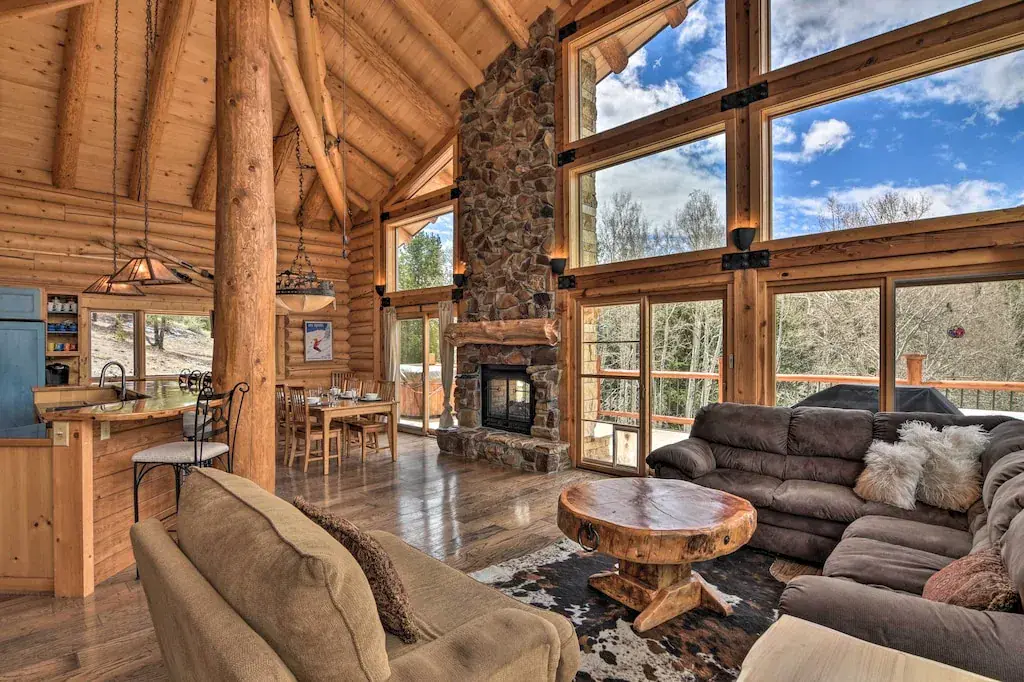
Throughout the mid-to-late twentieth century, this model shifted toward the democratized ski chalet and the standard lakeside vacation home. The rise of interstate highways and commercial aviation opened up mountain towns across the American West and New England to a broader base of vacationers. However, this era often favored volume over architectural distinction. This led to highly uniform, subdivision-style developments in alpine regions that frequently prioritized density over environmental privacy.
The modern era, accelerated by structural changes in the global workforce and wealth distribution in the mid-2020s, has moved decisively toward “quiet luxury” and architectural uniqueness. The modern high-end traveler views a vacation property not just as a basecamp for resort activities, but as an independent ecosystem. Current design choices reject the heavy, dark interior aesthetics of traditional log cabins in favor of clean lines, warm minimalism, and biophilic architecture.
Modern spaces feature massive floor-to-ceiling glass curtain walls, engineered timber frames, exposed structural steel, and microcement floors. These elements are designed to remove the visual boundaries between indoor spaces and the surrounding wilderness. Additionally, sustainability has evolved from a superficial marketing point into a core structural requirement. The modern standard demands net-zero energy performance, advanced solar storage arrays, and low-embodied-carbon materials, ensuring these remote structures can operate efficiently over the long term.
Conceptual Frameworks and Mental Models
To systematically evaluate, develop, or operate assets within major luxury cabin destinations usa, analysts and investors should utilize specific conceptual frameworks. These mental models help cut through marketing hype to reveal the true operational durability and market value of a property.
1. The Seclusion-to-Access Matrix
This framework evaluates the balance between a property’s physical isolation and its proximity to critical logistical hubs, such as private aviation terminals, regional airports, medical facilities, and fine dining.
True premium assets occupy a unique sweet spot: they provide complete visual and acoustic isolation while remaining within a sixty-minute drive of an airport capable of handling private jet arrivals. If a property is too accessible, its long-term exclusivity faces risks from nearby development. Conversely, if it is too isolated, the travel friction reduces its addressable rental market and complicates essential property management services.
2. The Carrying-Capacity Constraint Model
This model assesses the structural and ecological limits of a destination’s micro-market. It measures strict limits such as water rights in arid western regions, steep-slope construction bans in alpine zones, and local short-term rental caps. Properties located in markets that have reached their carrying capacity enjoy a protected asset class status. In these areas, the risk of supply dilution is minimal, ensuring long-term asset value and strong pricing leverage.
3. The Biophilic Integration Index
This framework assesses how effectively a cabin’s architecture blends with its natural surroundings. True high-end design avoids placing a generic mansion into a wilderness setting. Instead, it evaluates the property based on:
-
Sightline Optimization: Designing the home so that adjacent properties or roads are completely invisible from all primary living spaces and outdoor decks.
-
Material Integrity: Using regional stone, native wood species, and matte, non-reflective metals that allow the exterior structure to blend naturally into the local landscape.
-
Micro-Climate Adaptability: Orienting the building to maximize passive solar heating during winter while utilizing natural geographic wind corridors for cooling during summer.
Key Categories and Regional Variations
The landscape of luxury cabin destinations usa is diverse, with each region shaped by its unique geography, local climate challenges, and historic architecture. The table below compares the primary regional profiles across North America.
Regional Market Analysis
Regional Decision Logic
Choosing where to invest or travel depends heavily on balancing seasonal access against desired geographic privacy.
For example, the Northern Rocky Mountains offer unparalleled alpine views and world-class winter sports infrastructure. However, they demand significant operational upkeep, requiring specialized snow-plowing equipment and heavy structural engineering to handle immense winter snow loads.
Conversely, Southern Appalachia provides a longer, more balanced multi-season operational calendar with milder winters. This makes it highly appealing for year-round cash flow, though operators must navigate strict local ridge-cap development restrictions designed to protect the natural skyline.
In the Pacific Northwest, the design focus shifts to managing constant moisture and optimizing natural light. Properties here lean on large glass panels and advanced rain-screen systems to handle the damp climate while capturing every bit of available daylight.
Meanwhile, the Desert Southwest requires a completely different engineering approach. Builders in this region prioritize thermal mass materials like rammed earth and concrete to keep interiors cool during intense summer days while retaining warmth during cold desert nights.
Detailed Real-World Scenarios
To understand the operational and financial realities of managing properties in these luxury cabin destinations usa, we can analyze several real-world operational scenarios. These case studies highlight the hidden challenges, pivot points, and second-order effects that define high-end wilderness real estate.
Scenario 1: Developing a High-End Mountain Contemporary Estate in the Northern Rockies
An investment group purchased an isolated ten-acre parcel at an elevation of 7,500 feet in Montana, aiming to build a 6,000-square-foot modern cabin featuring a cantilevered living room over a steep ridge.
-
The Unexpected Challenge: Initial geotechnical testing revealed unstable shale layers down to twenty feet. This ruled out a standard poured-concrete foundation and required drilling deep helical steel piers straight into the bedrock, instantly adding $250,000 to the budget.
-
The Operational Impact: During the first winter, a historic blizzard dropped four feet of snow in forty-eight hours. The local micro-contractor’s standard trucks could not clear the steep 12% grade driveway, leaving a high-profile guest stranded for thirty-six hours.
-
The Resolution and Second-Order Effects: The operators installed an automated hydronic snow-melt system beneath the primary driveway asphalt, powered by a dedicated commercial propane boiler. This solved the access issue but raised fixed monthly utility costs by $1,800 during the winter, forcing them to raise their peak-season minimum stay requirements to protect profit margins.
Scenario 2: Retrofitting a Legacy Great Camp Compound in the Adirondacks
A private family office acquired a historic lakeside cabin compound built in 1920, intending to update it with modern smart automation, premium climate control, and luxury wellness facilities without losing its historic character.
-
The Unexpected Challenge: The local watershed conservation authority prohibited any digging within one hundred feet of the shoreline. This blocked the family’s plans to install an energy-efficient geothermal heat pump loop in the lake. Additionally, the cabin’s uninsulated twin-log walls could not accommodate standard ducted HVAC systems without ruining the historic interior woodwork.
-
The Operational Impact: In response, builders used small-duct, high-velocity air conditioning systems carefully hidden inside custom furniture and built-in wardrobes. They also placed high-efficiency air-to-air heat pumps in a newly built outbuilding located well outside the protected lakeside zone.
-
The Resolution and Second-Order Effects: While this custom installation preserved the cabin’s historic aesthetic, the lack of traditional wall insulation led to high energy consumption during mid-winter cold snaps. This required adding a sophisticated, remote-monitored backup wood-pellet heating system to keep the property safe from freezing during winter power outages.
Planning, Cost, and Resource Dynamics
Operating within the luxury cabin market requires understanding that capital expenditures (CapEx) and operational expenditures (OpEx) run significantly higher than in standard residential real estate. The table below breaks down the typical cost structures and investment distributions across premium U.S. wilderness markets.
Capital Allocation and Operational Expense Breakdown
Tools, Strategies, and Support Systems
Successfully running a property in top-tier wilderness destinations requires deploying a specialized suite of technology, operational frameworks, and professional networks. These systems are essential for maintaining property value and ensuring guest safety in remote environments.
1. Remote Industrial Automation
Standard smart-home setups often fail in remote areas due to unstable internet connections or extreme weather. High-end cabins rely on industrial-grade programmable logic controllers (PLCs) that run critical automation locally without needing cloud connectivity. These systems monitor interior humidity, track water pressure to spot leaks instantly, and cycle back-up generators without requiring on-site staff.
2. Dual-Path Satellite and Cellular Connectivity
To satisfy guests who work remotely, premium cabins combine high-speed satellite internet like Starlink Business with a secondary, high-gain cellular data connection. An automated load-balancing router switches between networks seamlessly. This guarantees uninterrupted, high-bandwidth internet even during severe mountain storms or regional network outages.
3. On-Site Redundant Energy Systems
True luxury off-grid operation relies on a tri-tier energy setup:
This multi-stage system ensures the estate can run all high-draw luxury amenities, like heated pools or saunas, through extended winter storms without any drop in power quality.
4. Proactive Wildfire Defensible Strategy
In the Mountain West and Desert Southwest, managing wildfire risk is a core operational requirement.
5. Private Logistical Support Networks
The smoothest guest experiences are built on deep partnerships with local service providers.
Risk Landscape and Failure Modes
Operating high-end properties in remote wilderness areas involves navigating a complex landscape of environmental, regulatory, and mechanical risks. Left unmanaged, these challenges can quickly compromise both guest safety and asset valuations.
1. Environmental and Climate Risks
-
Extreme Freeze-Thaw Cycles: Rapid temperature swings cause water trapped in stone terraces and concrete foundations to expand and contract. Over time, this creates structural cracks, destabilizes outdoor living spaces, and breaks underground utility lines.
-
Wildfire Smoke Damage: Even if a fire does not reach the property, heavy smoke can ruin expensive interior fabrics, clog high-end air filtration systems, and force operators to shut down the property for weeks for deep cleaning.
2. Regulatory and Legal Challenges
-
Sudden Short-Term Rental Bans: Many scenic counties face housing shortages, leading local governments to impose sudden caps, expensive permit fees, or outright bans on short-term rentals. These policy changes can quickly disrupt a property’s revenue model.
-
Strict HOA and Conservation Rules: High-end homeowners associations often limit external lighting, dictate allowed paint colors, restrict helicopter landings, and control construction schedules. These rules can limit an owner’s ability to upgrade or fully utilize their estate.
3. Mechanical and Structural Flaws
-
High-Altitude Glass Failure: Moving large glass panels manufactured at sea level up to high-altitude mountain locations can cause the insulating gas layer to swell, popping seals or cracking the glass. Specialized capillary tubes or on-site pressure adjustments are required to prevent these failures.
-
Deep-Well Water Contamination: Remote properties rely entirely on private wells. Shifts in underground water tables, agricultural runoff, or nearby mining can suddenly alter water chemistry, causing mineral buildup in expensive plumbing systems or making the water unsafe without industrial-grade treatment systems.
Governance, Maintenance, and Long-Term Adaptation
To keep a luxury cabin functional and relevant over decades, owners must look past short-term fixes and implement structured, calendar-driven maintenance schedules. The following multi-tiered checklist outlines the essential maintenance rhythms required to protect these complex assets from natural wear and tear.
Multi-Tiered Property Maintenance Protocol
1. Pre-Winter Hardening Checklist (September–October)
-
Mechanical Check: Service all primary and backup boilers, replace air filters, and run a full load test on backup generators under load for two hours.
-
Plumbing Winterization: Drain and blow out all outdoor lines, turn off exterior spigots, and verify that self-regulating heat tape on exposed crawlspace pipes is drawing power.
-
Building Envelope Audit: Check the seals around all large structural glass panels, clean out roof gutters, and inspect valley flashings to prevent ice dams.
-
Fuel Infrastructure: Top off all bulk underground propane or heating oil tanks to ensure full capacity before heavy winter snow limits delivery truck access.
2. Spring Re-Emergence Checklist (April–May)
-
Foundation Assessment: Inspect the foundation, concrete patios, and retaining walls for cracks or movement caused by winter frost heaving.
-
Defensible Space Clearing: Trim low tree branches, rake away dead winter debris, and clear out flammable underbrush within one hundred feet of all structures.
-
Roofing and Flashing Scan: Check the roof for loose shingles or damaged metal seams caused by heavy snow sliding off the roof.
-
Water Quality Testing: Run a professional laboratory analysis on well water to check for mineral changes, sediment level shifts, or bacterial contamination after the spring snowmelt.
3. Continuous Structural Systems Monitoring
-
Weekly Automation Audit: Remotely check all automated logs to catch unusual battery drains, minor water pressure drops, or climate control inefficiencies early.
-
Bi-Annual Wood Treatment: Inspect exterior timbers for UV damage, resealing exposed south-facing logs every twenty-four months with premium, non-glossy protective stains to prevent rot.
Measurement, Tracking, and Evaluation
Evaluating the performance of an asset within major luxury cabin destinations usa requires balancing hard financial data with subtle operational signals. Relying solely on short-term income metrics can mask growing maintenance issues or a decline in market exclusivity.
Investors and operators should track key financial and operational metrics, including:
-
Revenue Per Available Room (RevPAR) & Average Daily Rate (ADR): Tracking these figures against regional luxury benchmarks helps identify whether the property retains its pricing power or is losing ground to newer builds.
-
Net Operating Income (NOI) & Capitalization Rate: Measuring true profitability by balancing premium rental income against high operational costs, such as specialized snow clearing, remote estate management, and rising commercial insurance rates.
-
Well Recovery Rate & Total Dissolved Solids (TDS): Monitoring water volume and purity over time ensures the property’s primary water source remains stable and healthy.
-
Generator Run-Time Ratio: Tracking how often backup generators cycle on helps pinpoint underlying regional grid instability, signaling when it might be time to expand on-site solar or battery storage capacity.
Contextual and Macro-Environmental Considerations
The long-term value of assets within luxury cabin destinations usa is deeply tied to broader economic trends, environmental changes, and shifts in infrastructure.
Climate shifts are changing traditional vacation seasons. In some regions, shorter winters are pushing operators to position their properties as multi-season retreats, investing in summer amenities like private trail networks, mountain biking infrastructure, and advanced cooling systems to capture year-round demand.
At the same time, the insurance industry is adjusting how it prices risk for remote, high-value wood structures. In areas prone to wildfires or heavy coastal storms, standard insurance providers are pulling back. Securing coverage now requires meeting strict safety standards, such as installing automated exterior misting systems, clearing large fire breaks, and utilizing non-combustible building materials.
On the demographic front, the normalization of hybrid work among executives and business owners has transformed cabins from brief weekend escapes into long-term residential compounds. This shift has fundamentally changed interior design priorities.
Conclusion
The market for high-end wilderness cabins represents a sophisticated blend of ambitious architecture, disciplined financial investment, and complex civil engineering. These properties have evolved far beyond simple rustic getaways; they are highly independent sanctuaries designed to offer seamless, world-class comfort in some of the continent’s most rugged and restricted landscapes.
Navigating this space successfully requires a deep understanding of geographic scarcity, environmental constraints, and the specialized systems needed to run complex infrastructure far from urban centers. As travel preferences continue to favor privacy, environmental connection, and architectural uniqueness, these well-built assets stand out as durable, long-term investments in the premium real estate market.