Luxury Glamping Destinations USA: Architecture and Operations Guide
Luxury glamping destinations usa. The evolution of outdoor hospitality has moved far past the simple distinction between traditional backcountry camping and conventional luxury resorts. What was once a small niche market has grown into a highly developed industry that mixes high-end hospitality with wilderness immersion. This intersection creates a unique set of challenges in design, environmental impact, and logistics. High-net-worth travelers looking for remote natural experiences no longer accept the trade-off of sleeping on the ground or dealing with poor facilities. This shift has forced developers to create permanent, low-impact structural designs that provide the creature comforts of a five-star hotel in remote, ecologically sensitive areas.
Analyzing this modern hospitality space requires evaluating how high-end architecture interacts with wilderness management. Building and operating high-end outdoor properties demands a deep understanding of remote utility systems, off-grid power management, and strict local environmental laws. Unlike a standard city hotel, which plugs directly into public infrastructure, a remote wilderness resort must function as a self-sustaining system. It must generate its own power, process its own waste, and handle water supply, all while maintaining a flawless, premium experience for guests who expect top-tier service.
For the real estate developer, hospitality analyst, or travel researcher, understanding this market requires looking past the standard imagery found in lifestyle magazines. It requires a serious analysis of the balance between operational realities, construction constraints, and guest expectations. A comprehensive analysis must examine the structural integrity of fabric-walled structures under extreme weather, the economics of running seasonal remote properties, and the architectural choices that help a property blend into its natural surroundings without damaging the local ecosystem.
Understanding “luxury glamping destinations usa”
To construct a rigorous analysis of luxury glamping destinations usa, researchers must separate the industry from its surface-level social media aesthetic. Academically and operationally, high-end outdoor hospitality is defined as an experiential lodging model that pairs non-traditional architectural structures—such as safari tents, geodesic domes, treehouses, and custom wagons—with the service standards, linen quality, culinary programs, and private en-suite amenities of premium boutique hotels. It is a real estate asset class characterized by low-density development, high average daily rates (ADR), and a reliance on the surrounding landscape to drive guest demand.
A common analytical error is treating all high-end outdoor properties as structurally identical. This oversimplification ignores the massive differences in civil engineering, local zoning, and building codes required across different climates. A safari tent asset in the arid Southwest requires custom passive cooling systems and UV-resistant canvas treatments. The exact same tent structure built in the Pacific Northwest requires elevated, moisture-sealed timber sub-frames, active dehumidification, and heavy snow-load structural reinforcement.
Evaluating these properties requires calculating an Environmental Integration Coefficient (EIC). This metric measures the ratio of private structural square footage to the total preserved acreage of the property, adjusted by the visual and physical impact of the infrastructure on the surrounding landscape.
Properties with a high EIC offer true wilderness isolation and high architectural harmony, while low-scoring properties resemble dense, high-yield campgrounds where fabric walls fail to provide adequate acoustic privacy or true environmental separation.
Deep Contextual Background and Market Evolution
The roots of high-end outdoor lodging run through historical hunting safaris, royal expeditions, and early twentieth-century wilderness tourism. However, the modern American market took a major turn during the economic shifts of the late 2000s. As travelers sought authentic, wellness-focused experiences over generic luxury resorts, developers realized they could command premium room rates by offering direct access to nature without the discomforts of traditional camping. This shift transformed fabric and timber shelters from simple campground options into high-yielding real estate assets.
This development accelerated with the standardization of custom off-grid construction techniques. The introduction of high-tensile architectural canvas, engineered wood beams, and self-contained waste management systems allowed developers to build out pristine locations that were previously inaccessible due to strict building codes or extreme geography.
During the mid-2010s, institutional capital and venture private equity groups stepped into the market. This influx of funding turned independent, single-owner camps into national hospitality brands operating across multiple states. This corporate backing brought sophisticated property management systems, centralized reservation networks, and standardized guest service training into the wilderness.
Consequently, the industry moved away from its early DIY roots and adopted disciplined real estate metrics. Properties began optimizing their guest-to-acreage ratios and refining their seasonal operational models to maximize revenue during peak weather windows.
The industry faced a critical test as it matured into the 2020s. Rapid development in fragile environments triggered pushback from rural communities and environmental groups, leading to stricter zoning rules, detailed water rights reviews, and tougher building inspections.
Today, the sector operates under a complex mix of local, state, and federal land-use regulations. Success in this competitive landscape requires an equal focus on sustainable civil engineering, authentic architectural design, and proactive community relations.
Conceptual Frameworks and Mental Models
To understand and manage these high-end outdoor assets without getting lost in changing travel trends, developers and operators can use several core frameworks drawn from environmental engineering, hospitality economics, and spatial design.
The Infrastructure Isolation Paradox
This model states that the economic value of a luxury wilderness property increases with its remote isolation, while its operational efficiency drops at a similar rate.
-
Application: The highest average daily rates (ADR) are found at properties that feel completely removed from civilization. However, these same locations face higher costs for hauling water, maintaining off-grid power, and transporting staff.
-
Limitation: If a property is located too far from regional airports or supply centers, the cost of logistics can wipe out the profits gained from premium room rates.
The Acoustic and Visual Viewshed Envelope
This framework dictates that the success of a premium outdoor structure depends on creating a completely private visual and acoustic bubble for the guest.
-
Application: Designers use this model to lay out sites along natural ridges, rock formations, and tree lines, ensuring that no tent has a direct line of sight into another unit’s living space or outdoor deck.
-
Limitation: Increasing the distance between units requires longer utility runs, which raises the upfront cost of plumbing, electrical wiring, and walkways.
The Seasonal Compression Financial Cycle
This framework analyzes how a seasonal outdoor property must manage its finances when it earns all its revenue during a short 5-to-7 month weather window but must maintain its infrastructure year-round.
-
Application: This model forces operators to build flexible staffing plans and allocate enough capital during the summer to cover fixed land leases, insurance, and heating costs throughout the freezing winter months.
-
Limitation: Unpredictable weather shifts, such as late spring snows or early autumn wildfires, can shorten the profitable season and disrupt the property’s annual financial plan.
Key Structural Categories and Architectural Variations
Luxury outdoor properties utilize a wide variety of architectural structures, each presenting distinct engineering footprints, climate performance profiles, and operational trade-offs.
Premium Safari-Style Canvas Tents
Heavy-duty canvas structures built on permanent pressure-treated timber or steel frames, featuring insulated multi-layer roofs and integrated canvas zippered doors.
-
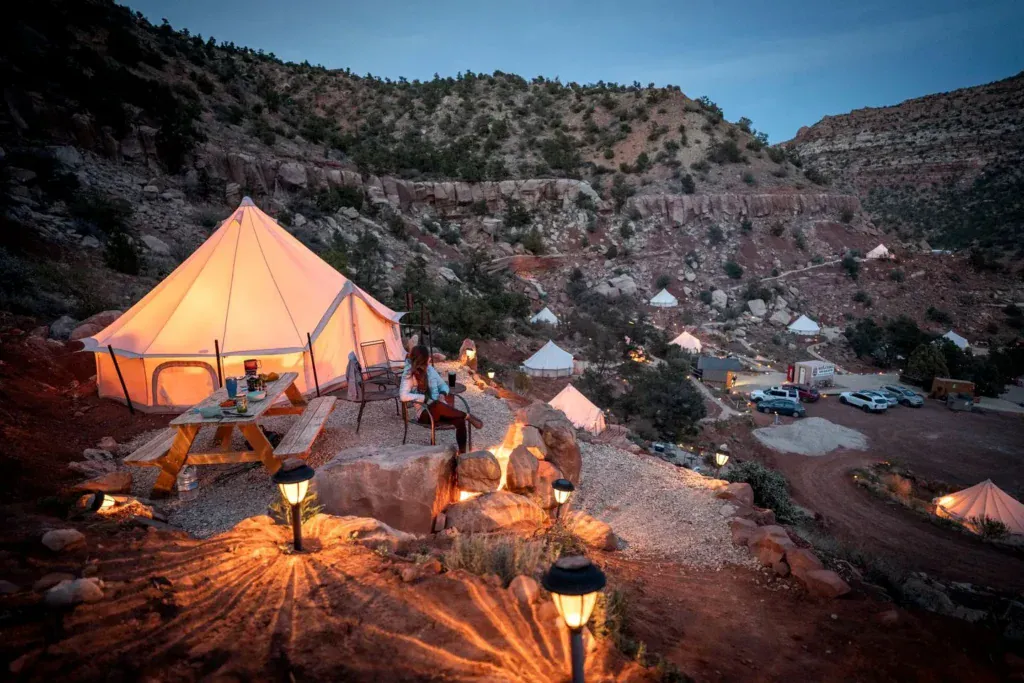
Key Examples: Canvas setups found across the red-rock desert landscapes of Southern Utah and northern Arizona.
-
Engineering Footprint: Requires heavy earth anchoring or concrete footings to handle high winds; features open-air or canvas-walled bathroom bump-outs, and relies on custom fabric tensioning systems.
Geodesic and Polycarbonate Domes
Spherical structures made from interlocking triangular frames covered in heavy-duty PVC or rigid polycarbonate panels, offering excellent structural strength.
-
Key Examples: High-altitude clear domes in the Colorado Rockies and the clear-roof star-view structures in the Texas hill country.
-
Engineering Footprint: High structural wind and snow resilience; requires active solar exhaust systems to prevent heat buildup, and utilizes curved interior walls that require custom furniture and plumbing layouts.
Custom Elevated Treehouses
Permanent wooden or steel-frame structures built high off the ground, supported by heavy timber columns, structural steel stilts, or mature tree trunk networks.
-
Key Examples: Elevated forest platforms in the old-growth canopy of Western Oregon and the Great Smoky Mountains of Tennessee.
-
Engineering Footprint: Complex structural engineering reviews; requires flexible utility conduits that move with the trees, and features steep entry ramps or suspension bridges that must meet local safety codes.
Reimagined Pastoral Wagons and Shepherds’ Huts
High-end, mobile or semi-permanent wooden cabins built on top of heavy steel chassis systems with iron wheels, throwing back to old pioneer designs.
-
Key Examples: Custom oversized sheep wagons located on working ranches in Montana and Wyoming.
-
Engineering Footprint: Limited interior space that requires clever built-in storage; easily moved out of flood zones or winter snow areas, and requires flexible quick-disconnect utility lines.
Mirror Cabins and Architectural Glass Pavilions
Modern minimalist cabins built with reflective structural glass exteriors designed to blend completely into the surrounding trees or desert rocks.
-
Key Examples: Mirror-walled cabins in the high deserts of California and the dense woodlands of New York’s Catskill Mountains.
-
Engineering Footprint: Heavy steel foundations to support large glass panels; requires specialized anti-collision bird coatings, and demands high-capacity HVAC systems to handle solar heat gain.
Architectural and Engineering Matrix
The table below evaluates these primary luxury outdoor structures across key operational, financial, and mechanical metrics:
| Structure Category | Primary Foundation Style | Useful Asset Lifespan | Wind & Snow Resilience | Top Structural Vulnerability |
| Safari Canvas Tents | Elevated timber decks, concrete piers | 5–8 Years (Canvas replacement needed) | Moderate wind resistance, vulnerable to heavy snow | Mold and mildew buildup, UV degradation, fabric tears |
| Geodesic Domes | Floating circular decks, screw anchors | 8–12 Years (PVC membrane swap) | High wind and snow load distribution | Poor natural cross-ventilation, plastic yellowing |
| Elevated Treehouses | Steel stilts, dynamic tree collars | 15–25 Years (High durability) | High wind flexibility, vulnerable to falling branches | Tree growth shifting foundations, complex high-altitude plumbing |
| Pastoral Wagons | Heavy steel wheeled chassis, gravel pads | 10–15 Years (Mobility benefit) | Moderate wind resistance, low snow tolerance | Restricted interior space, tire and axle wear over time |
| Mirror Glass Cabins | Reinforced concrete slabs, steel sub-frames | 20–30 Years (Permanent structure) | High wind and snow resistance | High solar heat buildup, glass breakage, high cleaning needs |
Decision Logic for Structural Site Planning
Choosing the right structure requires carefully matching the climate of your location with the engineering limits of the architecture and local land-use rules.
For instance, an engineering team developing a high-altitude site in Montana should focus on geodesic domes or permanent timber treehouses. These shapes distribute heavy snow loads evenly and resist strong mountain winds.
On the other hand, developers building in the humid forests of the Southeast should opt for elevated structures built on pressure-treated timber decks. Raising the units off the ground prevents moisture rot, improves natural airflow, and minimizes the risk of water damage from flash storms.
Detailed Real-World Operational Scenarios
Operating a luxury outdoor property means managing live situations where weather, equipment limits, and isolation test the skills of the management team.
Scenario 1: Managing Off-Grid Power Overloads During a Southwest Heatwave
A luxury property near Moab, Utah, experiences a multi-day summer heatwave with temperatures passing 105 degrees Fahrenheit. Guests expect their tent air conditioning units to run flawlessly all day.
-
Operational Constraints: The property runs entirely on a hybrid solar-and-battery microgrid backed up by diesel generators. The sudden surge in power demand from multiple AC units risks overloading the system.
-
Decision Points: Management must decide whether to run backup generators continuously—which increases fuel costs and creates noise that disturbs the quiet wilderness experience—or ask guests to adjust their temperature settings.
-
Second-Order Effects: Running backup generators non-stop ensures guest comfort but burns through remote fuel reserves quickly and harms the property’s eco-friendly brand image.
Scenario 2: Mitigating Flash Flood Risks at a Canyon Property in Arizona
A sudden summer monsoon storm drops two inches of rain in under an hour up-canyon from an upscale wagon outpost located on a valley floor.
-
Failure Modes: Rising water can wash out gravel paths, damage underground plumbing lines, and trap guests in their units.
-
Operational Pivot: Using the mobile design of the custom wagons, the team disconnects the flexible utility lines and uses trucks to pull the units up onto pre-mapped high-ground sites before the floodwaters hit the valley floor.
Scenario 3: Managing Spring Moisture and Mildew in the Pacific Northwest
An upscale tent property in western Washington prepares to open for the spring season after months of heavy winter rains and high humidity.
-
Operational Constraints: Mold and mildew can quickly grow in the dark, damp folds of stored canvas tents, damaging the fabric and leaving musty odors that ruin the premium guest experience.
-
Failure Modes: Opening units without treating mold can trigger guest complaints and ruin expensive custom linens and indoor furniture.
Planning, Cost, and Asset Dynamics
The economics of high-end outdoor hospitality require balancing low initial land acquisition costs with exceptionally high infrastructure development costs in remote areas.
Capital Allocation and Infrastructure Dynamics
Investors often mistakenly assume that because the main structures are made of canvas or wood, building a luxury camp is cheap. In reality, bringing high-end utilities into raw land can cost more than standard hotel construction.
Plumbing premium en-suite bathrooms, running power lines through rocky terrain, and building durable waste systems that comply with local environment laws require major upfront capital.
Development Tiers and Capital Requirements
The table below breaks down estimated development costs, average daily rates (ADR), and infrastructure needs across three tiers of property complexity:
| Development Tier | Average Daily Rate (ADR) | Infrastructure Capital | Primary Utility Strategy | Critical Financial Risk |
| Tier 1: Semi-Grid Tethered | $350 – $550 | $75,000 – $120,000 per key | Shared septic systems, local grid power lines | High vulnerability to local grid outages and rising land lease costs |
| Tier 2: Fully Off-Grid Premium | $600 – $950 | $150,000 – $220,000 per key | Hybrid solar-battery grids, private water wells | High seasonal cash-flow drop, rising costs for remote maintenance staff |
| Tier 3: Ultra-Luxury Wilderness | $1,200 – $2,500+ | $350,000 – $500,000+ per key | Advanced water filtration, hidden underground lines | Long payback periods on upfront engineering, high exposure to extreme weather |
The Opportunity Cost of Seasonal Closures
For properties located in northern climates or high altitudes, winter weather forces complete operational closures. During these down months, the asset generates zero revenue but still carries fixed costs like land leases, property taxes, structural insurance, and year-round security.
Asset managers must structure their finances carefully, ensuring they build up large cash reserves during the peak summer months to keep the business financially healthy through the winter freeze.
Systems, Tools, and Support Frameworks
Operating a high-end remote property requires a specialized mix of environmental management tools, off-grid hardware, and custom property management systems.
-
Hybrid Solar Inverter Arrays: Central control systems that manage power switching between solar panels, battery banks, and backup generators without dropping voltage.
-
Satellite-Linked Property Management Systems (PMS): Custom cloud software that updates reservations, coordinates housekeeping teams, and handles guest billing over remote satellite internet connections.
-
Subterranean Propane Distributors: Large, hidden underground propane networks that provide steady gas for water heaters and room heaters without cluttering the landscape with ugly tanks.
-
Low-Frequency Long-Range (LoRa) Radios: Handheld communication gear that keeps management, maintenance, and safety teams connected across miles of rough terrain where cellular service fails.
-
UV and Carbon Block Water Purification Skids: On-site treatment systems that filter raw well water or trucked-in water through multi-stage filters, making it completely safe and clean for guest use.
-
High-Acoustic Insulation Canvas Interliners: Specialized fabric layers hung between the interior walls and exterior canvas to deaden outside wind noise and help retain indoor heating and cooling.
-
Wireless Tank Telemetry Monitining Sensors: Remote sensors that track water and waste tank levels in real time, alerting operations teams well before a tank runs dry or overflows.
Risk Landscape and Operational Failure Modes
High-end outdoor destinations face a unique mix of natural and operational risks that can quickly disrupt daily business, damage valuable structures, or impact guest safety.
Canvas Tear Propagation and Framing Failures
High winds pose a constant threat to fabric-walled accommodations. During a heavy storm, a small puncture from a falling branch can quickly grow into a major rip under wind pressure. If the canvas tears open, wind can catch the inside of the structure, twisting structural frames, breaking support beams, and ruining expensive interior furniture and decor within minutes.
Remote Water Infrastructure Freeze-Ups
In alpine or high-desert locations, early autumn or late spring cold snaps can drop temperatures well below freezing overnight.
If water lines running beneath outdoor decks or inside unheated utility sheds freeze and burst, the property can suffer a total water outage, forcing management to close units and issue expensive refunds to guests.
Wildlife Intrusion and Food Storage Violations
Building deep within natural habitats increases the risk of unwanted wildlife encounters. If guests leave food or sweet drinks inside canvas tents or out on open decks, they can easily attract local wildlife like black bears, raccoons, or rodents. These animals can tear through canvas walls and damage custom wood cabinets looking for a meal, creating a serious safety hazard for guests and staff alike.
Environmental Governance and Asset Adaptation
Building and running an upscale outdoor resort requires working closely with local environmental agencies, county boards, and wildlife protection groups.
Environmental Policy and Land-Use Compliance
Property developers must work within several key legal and environmental frameworks:
-
Bureau of Land Management (BLM) Visual Resource Management: Rules that dictate how buildings must look, requiring natural paint colors and non-reflective materials so private properties blend in smoothly with neighboring public lands.
-
National Environmental Policy Act (NEPA) Environmental Assessments: Detailed studies required for properties built near federal lands to ensure development won’t harm local endangered species, disrupt migration paths, or damage historic cultural sites.
-
Local Right-to-Farm and Open-Space Easements: Legal agreements that protect neighboring ranches and farms from noise complaints while ensuring the resort land cannot be split up into dense suburban developments.
Multi-Point Property Inspection and Seasonal Pivot Checklist
To protect remote structural assets from weather damage and ensure systems run efficiently, maintenance teams follow a strict seasonal checklist:
Spring Opening Routine
-
Uncover and tension all exterior structural canvas, checking seams for winter wear or pest damage.
-
Flush and sanitize all remote water lines, pressure-testing valves to catch any hidden winter freeze leaks before guests arrive.
Mid-Summer Peak Audit
-
Check solar panels for dust and debris, washing surfaces to ensure the microgrid maintains maximum power output during hot weather.
-
Inspect outdoor decks and structural wood footings for signs of insect damage or wood rot caused by summer rain and humidity.
Autumn Winterization Protocol
-
Drain all water lines and pump eco-friendly antifreeze into plumbing traps to prevent pipes from freezing and bursting over the winter.
-
Remove or securely tie down exterior canvas panels and store indoor custom furniture in climate-controlled lockers to protect them from winter mountain storms.
Performance Measurement and Quality Evaluation
Successful operators do not rely on guesswork; they use a balance of hard operational data and guest feedback to maintain high service standards and keep properties running smoothly.
Leading vs. Lagging Indicators
Resort managers track two primary types of data to guide operations:
-
Leading Indicators: Metrics that warn you of operational issues before they impact revenue or trigger poor reviews.
-
Lagging Indicators: Historical data that measures past performance and financial health. Examples include tracking monthly average daily rates (ADR), analyzing online review scores, or calculating total seasonal maintenance costs per unit.
Field Operational Logs
The notes below show how property managers and field engineers document the condition of different remote units during routine inspections:
Common Misconceptions and Industry Myths
Myth 1: Fabric-walled tents offer the same soundproofing as standard hotel rooms
Correction: Canvas walls cannot block sound waves effectively.
Myth 2: Building a luxury campsite is faster and easier than building a brick-and-mortar hotel
Correction: Bringing roads, water wells, solar grids, and large septic networks into rugged, remote land often takes longer and requires more environmental permits than building standard commercial hotels in developed urban areas.
Myth 3: Premium eco-resorts always generate a 100% green, zero-carbon footprint
Correction: While these properties rely heavily on solar power and low-impact designs, almost all remote locations use backup diesel generators during long storms or heatwaves, and hauling in water and supplies via truck adds to the property’s carbon footprint.
Myth 4: These remote properties are simple businesses that require minimal on-site staff
Correction: Because remote utility systems are complex and vulnerable to weather, these properties require highly skilled on-site engineering and maintenance teams available 24/7 to handle grid issues, water leaks, and wildlife encounters instantly.
Myth 5: Fabric safari tents can be left up year-round in any climate without wear
Correction: Leaving canvas structures exposed to heavy winter snow, freezing rain, and high winds accelerates fabric rot and causes structural sag. Most premium properties in northern states take down their tents during the off-season to preserve their investment.
Myth 6: High average daily rates guarantee high profit margins for remote operators
Correction: High room rates are often balanced out by high operating costs, including expensive water hauling fees, intensive off-grid system maintenance, and the need to hire and house premium hospitality staff in remote regions.
Ethical and Land-Use Considerations
The rapid expansion of upscale glamping outposts across rural landscapes has brought up important discussions about land use, local housing markets, and community identity. When large corporate developers buy up agricultural land or pristine wilderness plots to build high-end tourist camps, they can quickly drive up land values and property taxes. This increase can make it difficult for local farming families or hospitality workers to afford housing in their own communities, turning old ranching zones into exclusive tourist enclaves.
To build healthy, long-term relationships, developers must focus on local community needs. This means paying fair, competitive wages to regional staff, sourcing food and materials from nearby farms and workshops, and respecting local water rights in dry regions.
Future Outlook and Industry Synthesis
The luxury outdoor hospitality sector has grown out of its early novelty stage to become a permanent, sophisticated branch of the premium travel market. These remote properties give travelers a direct connection to nature without forcing them to give up the comforts of high-end hotels. However, maintaining this balance requires a deep, ongoing commitment to smart engineering, disciplined cost management, and careful environmental stewardship. Canvas and timber structures may seem simple on the surface, but keeping them running smoothly takes a lot of invisible, hard work behind the scenes.
As the industry moves forward, long-term success will belong to developers and managers who look past quick design trends and invest in durable, eco-friendly infrastructure. By building strong, self-sustaining utility systems, respecting local communities, and protecting the surrounding wilderness, operators can ensure these upscale destinations remain profitable, resilient, and welcoming spaces for mindful travelers for years to come.